
Dowry harassment destroys lives, and the law treats it as a serious crime. Whether you are a woman suffering cruelty and dowry demands, or a person wrongly accused in a false complaint, you need clear, strong and honest legal support. Advocate Preeti JD, Associates and Solicitors handles dowry harassment matters on both sides, protecting genuine victims and defending the falsely accused, with more than 17 years of focused family and matrimonial law experience.
Family law is not just what we do. It is all we do.
What Is Dowry Harassment?
Dowry harassment is the cruelty, threat or abuse a woman faces from her husband or his relatives in connection with demands for dowry. Dowry can mean money, property, jewellery, gifts or any valuable security demanded directly or indirectly, before, during or after the marriage. The harassment may be physical, emotional, verbal or financial.
Laws Against Dowry Harassment in India
Several laws work together to address dowry harassment:
- Dowry Prohibition Act, 1961: prohibits the giving, taking and demanding of dowry.
- Section 85 and Section 86 of the Bharatiya Nyaya Sanhita, 2023 (BNS): punish cruelty by a husband or his relatives, including dowry harassment. These replaced Section 498A of the Penal Code.
- Section 80 of the BNS: deals with dowry death, replacing the earlier Section 304B.
- Section 316 of the BNS: covers criminal breach of trust, used to recover a woman’s streedhan, replacing the earlier Section 406.
- Protection of Women from Domestic Violence Act, 2005: provides protection, residence and monetary relief.
Our practical guide on how to handle dowry harassment cases explains the process step by step.
Is Giving and Taking Dowry Illegal?
Yes. Under the Dowry Prohibition Act, 1961, both giving and taking dowry are punishable offences, and so is demanding dowry directly or indirectly. On conviction, these carry imprisonment and a fine, reflecting how seriously the law views the practice.
Section 85 BNS: Cruelty for Dowry
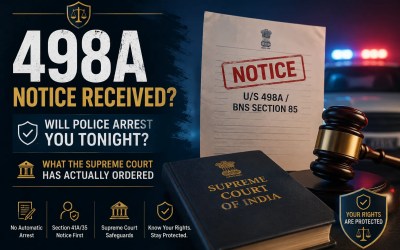
Section 85 of the BNS, which replaced the well-known Section 498A, punishes cruelty by a husband or his relatives towards a married woman. Cruelty, defined in Section 86, includes conduct likely to drive a woman to suicide or cause grave injury, as well as harassment to coerce her or her family into meeting an unlawful dowry demand. The offence carries imprisonment of up to three years along with a fine.
Dowry Death: Section 80 BNS
Dowry death is among the gravest offences in this area. Under Section 80 of the BNS, where a woman dies an unnatural death within seven years of marriage, and it is shown she was subjected to cruelty or harassment for dowry soon before her death, the law presumes the husband or his relatives responsible. This carries a severe punishment.
Recovering Streedhan
Streedhan is the property and gifts given to a woman before, during or after marriage, and it belongs to her absolutely. If her husband or in-laws refuse to return it, she can recover it through a criminal complaint for criminal breach of trust under the BNS, as well as through civil remedies.
Is a Dowry Harassment Case Bailable?
Cruelty for dowry under Section 85 BNS is generally a cognizable and non-bailable offence, which means the police can register and investigate it, and bail is granted at the discretion of the court. The seriousness of the provision reflects the harm it is meant to prevent.
Remedies That Often Go Together
Dowry harassment rarely stands alone. Depending on the situation, a woman may simultaneously pursue:
- Legal remedies for domestic violence, including protection and residence orders.
- Maintenance and alimony for herself and her children.
- Divorce on the ground of cruelty.
We coordinate these remedies into a single, coherent strategy.
Defending Against False or Exaggerated Complaints
The law against dowry harassment is powerful, and it is sometimes misused. We represent the accused fairly and firmly. A strong defence can rely on:
- The Supreme Court’s guidelines in Arnesh Kumar v. State of Bihar (2014), which restrict automatic arrest and require the police to justify it.
- Anticipatory bail to protect against wrongful arrest.
- Seeking quashing of a baseless complaint by the High Court using its inherent powers.
- Documentary and digital evidence showing the allegations are false.
At the same time, the law is clear that a genuine complaint should not be dismissed merely because it is hard to prove.
Evidence in Dowry Harassment Cases
Evidence often decides these cases. Useful material includes messages, emails, call recordings, photographs, medical records, a list of dowry given, witness statements and financial records. Preserving digital evidence properly, without tampering, is frequently decisive for either side.
How Advocate Preeti JD Helps
- For women facing harassment: We help file strong, well-evidenced complaints, recover streedhan, and secure protection, maintenance and divorce where needed.
- For the falsely accused: We mount a fair defence, secure anticipatory bail, and pursue quashing of baseless cases.
- Balanced and honest: As a woman family law advocate, Advocate Preeti JD is deeply committed to protecting genuine victims, while ensuring no one is convicted on false allegations.
- Confidential and result-oriented: Sensitive matters are handled with discretion and a focus on outcomes.
Why Choose Advocate Preeti JD
- Over 17 years of focused family and matrimonial law practice.
- A dedicated team of more than 20 professionals.
- Family law as the only area of practice, which means deep, specialised knowledge.
- Up-to-date command of the BNS provisions and current Supreme Court safeguards.
- Membership of the Supreme Court Bar Association, Punjab and Haryana High Court Bar Association, Gurugram Bar Association and the Indian National Bar Association.
- A client-first approach that is confidential, honest and result-oriented.
Book a Consultation
Whether you are seeking protection from dowry harassment or defending a false allegation, act early and act with the right counsel. Speak to us in confidence.
Advocate Preeti JD, Associates and Solicitors Chamber No. 149, C-Block, District and Sessions Court, Gurugram Phone: +91 8800383046, +91 8587025281 Email: mailadvpreeti@gmail.com
Book your appointment for a confidential consultation today.
Frequently Asked Questions on Dowry Harassment
What is dowry harassment?
Dowry harassment is the cruelty, threats or abuse a woman faces from her husband or his family in connection with demands for dowry, whether money, property or valuables, before, during or after the marriage.
Which laws cover dowry harassment in India?
Dowry harassment is covered by the Dowry Prohibition Act, 1961 and by Sections 85 and 86 of the Bharatiya Nyaya Sanhita, 2023 (formerly Section 498A), with dowry death dealt with under Section 80.
Is giving dowry also illegal?
Yes. Under the Dowry Prohibition Act, 1961, both giving and taking dowry are punishable offences. Demanding dowry directly or indirectly is also an offence, carrying imprisonment and a fine on conviction.
What is Section 498A, now Section 85 BNS?
Section 85 of the Bharatiya Nyaya Sanhita, which replaced Section 498A, punishes cruelty by a husband or his relatives towards a married woman, including dowry harassment, with up to three years imprisonment and a fine.
Is a dowry harassment case bailable?
Cruelty for dowry under Section 85 BNS is a cognizable, non-bailable and non-compoundable offence in most situations. This means the police can register and investigate it, and bail is at the court’s discretion.
Can a woman recover her streedhan?
Yes. Streedhan, the gifts and property given to a woman before, during or after marriage, belongs to her. She can recover it through a criminal complaint for criminal breach of trust and through civil remedies.
What is dowry death?
Dowry death, under Section 80 BNS, is when a woman dies unnaturally within seven years of marriage and was harassed for dowry shortly before. The law presumes the husband or relatives responsible in such cases.
How can a man defend a false dowry complaint?
A man can defend a false complaint with evidence and by relying on the Arnesh Kumar guidelines, which restrict automatic arrest. Remedies include anticipatory bail and seeking quashing of a baseless complaint.
Is there a time limit to file a dowry harassment complaint?
A complaint of cruelty for dowry should generally be filed within the limitation period from the last act of cruelty. Because harassment is often continuing, the exact timing depends on the facts of the case.
What evidence helps in a dowry harassment case?
Helpful evidence includes messages, emails, call recordings, photographs, medical records, lists of dowry given, witness statements and financial records. Well-preserved digital and documentary evidence is often decisive in dowry harassment cases.


0 Comments